
 Image 1 of 3
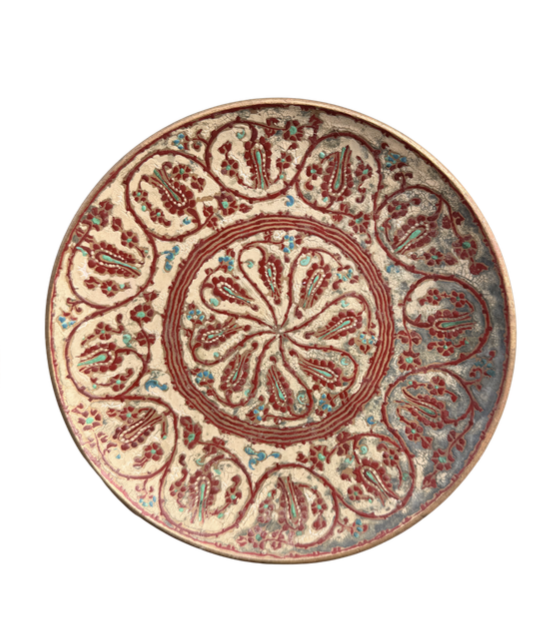 Image 2 of 3
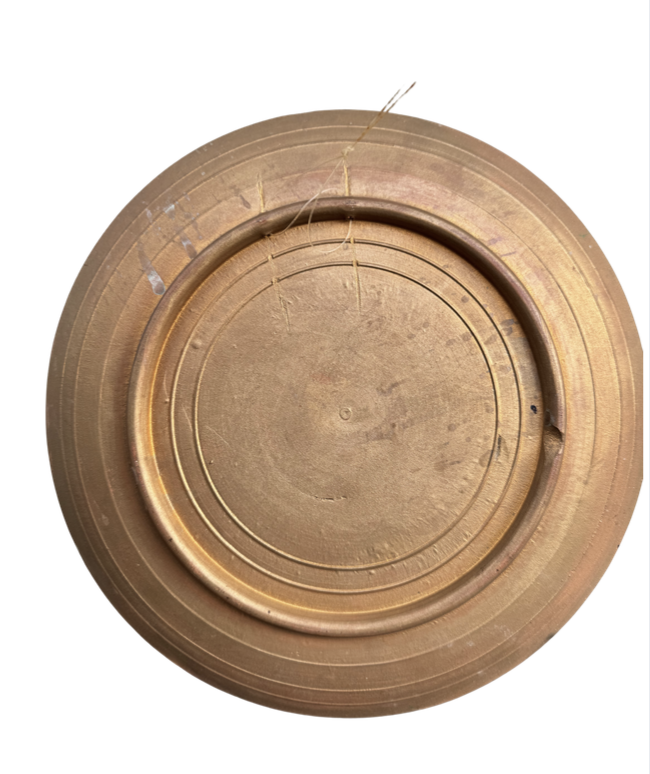 Image 3 of 3
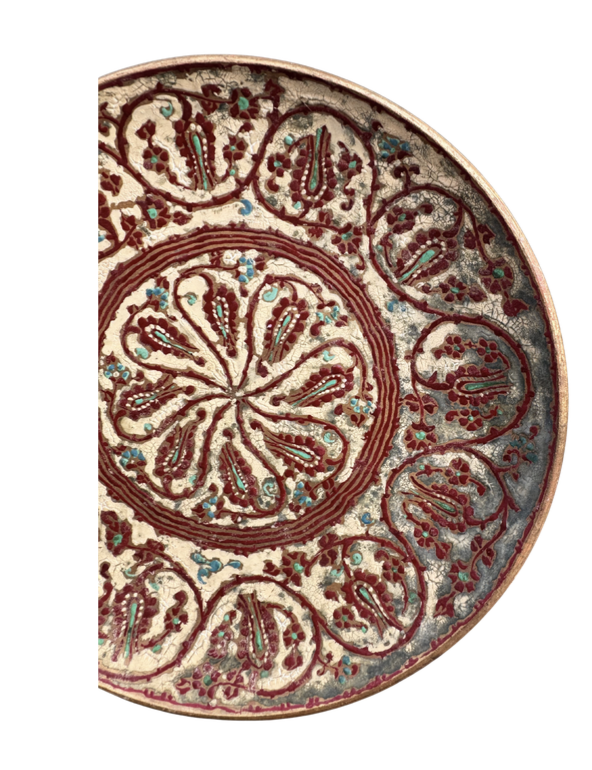
A stunning round decorative plate featuring an intricate all-over composition of paisley (boteh) motifs and radiating floral medallions rendered in rich crimson red and turquoise on a warm cream ground — the surfaces alive with fine dotted and beaded detailing. The reverse reveals a copper-toned metal back with concentric ring finish and original wire hanging loop, consistent with painted enamel on copper or lacquerwork on metal. A deeply beautiful object rooted in one of the world's great decorative traditions.
Time Period: c. Mid–Late 20th century
Origin: Persia (Iran) or India — consistent with Persian Minakari enamel or Indian lacquered metalwork traditions
Design Style: Persian / Islamic / Orientalist
Condition: Good — decoration vivid and intact; minor age-related wear to surface consistent with the medium; hanging wire intact
Provenance: The paisley or boteh motif — the teardrop-shaped form that dominates this plate's decoration — originated in Persian textile and decorative arts and became one of the most widely adopted motifs across Islamic, Indian, and eventually Western decorative traditions. Painted enamel on copper (Minakari in Persian) has been practiced in Isfahan and other Iranian centers since the Safavid period (16th–18th century), with a strong revival in the 20th century for the export market. The crimson and turquoise palette is characteristic of the finest examples of this tradition.
Collection: La Tropicana
Category: Wall Art & Mirrors
Minor variations from the images may occur unless otherwise noted. All sales are final.
A stunning round decorative plate featuring an intricate all-over composition of paisley (boteh) motifs and radiating floral medallions rendered in rich crimson red and turquoise on a warm cream ground — the surfaces alive with fine dotted and beaded detailing. The reverse reveals a copper-toned metal back with concentric ring finish and original wire hanging loop, consistent with painted enamel on copper or lacquerwork on metal. A deeply beautiful object rooted in one of the world's great decorative traditions.
Time Period: c. Mid–Late 20th century
Origin: Persia (Iran) or India — consistent with Persian Minakari enamel or Indian lacquered metalwork traditions
Design Style: Persian / Islamic / Orientalist
Condition: Good — decoration vivid and intact; minor age-related wear to surface consistent with the medium; hanging wire intact
Provenance: The paisley or boteh motif — the teardrop-shaped form that dominates this plate's decoration — originated in Persian textile and decorative arts and became one of the most widely adopted motifs across Islamic, Indian, and eventually Western decorative traditions. Painted enamel on copper (Minakari in Persian) has been practiced in Isfahan and other Iranian centers since the Safavid period (16th–18th century), with a strong revival in the 20th century for the export market. The crimson and turquoise palette is characteristic of the finest examples of this tradition.
Collection: La Tropicana
Category: Wall Art & Mirrors
Minor variations from the images may occur unless otherwise noted. All sales are final.